
Who should I contact before my medication runs out?
A refill problem is worth raising before the last tablet. You do not need to wait for a routine psychiatric appointment to ask for advice. This guide is about keeping an existing prescription connected to care; it does not choose a medication or tell you how to take it.
Call the pharmacy that usually dispenses it
Ask what is preventing the supply: no refills left, an expired prescription, stock, payment or something the prescriber needs to clarify. Have the box or label with you. A pharmacist can help explain medicine questions and contact the prescriber where appropriate. FDA guidance explains this role.
Contact the prescribing clinic
Use its urgent prescription contact if it has one. Say when your supply ends and ask who covers requests when your usual clinician is away. If the next appointment is too late, ask whether a clinician can assess the situation sooner. A message sent through a portal is not confirmation that it has been reviewed.
Ask for a route that fits the time available
If neither service can resolve it before the next dose is due, ask your pharmacist, primary care clinician or local urgent advice service what to do next. Explain if you have already run out. Do not wait for an unanswered routine message when you need advice sooner.
Confirm the actual next step
Before ending the call, ask: “Who is doing what, when should I hear back, and whom should I contact if that does not happen?” A request, an approved prescription and medicine ready to collect are different stages. Check which stage yours has reached.
Tell the professional when this started and whether doses have been missed. Ask for prompt clinical advice, not only an administrative refill. If symptoms are severe, you are in immediate danger or you cannot stay safe, seek emergency care. A refill form or HopeStage email is not an emergency service.
What to say when asking for an emergency prescription
Use the label rather than relying on memory. You can read this message aloud or adapt it for the clinic’s secure messaging service. If you have already run out, make that clear at the start.
A call script you can adapt
“I take [medicine name and strength], prescribed as [instructions]. I have [amount] left, and my last dose was [date and time]. My next appointment is [date]. The problem is [what the pharmacy or clinic told you]. I have [missed doses / symptoms / neither]. Can a pharmacist or clinician advise me on the next dose and how to arrange a supply? If you cannot help in time, who should I contact?”
You can say “I do not know” for anything you cannot verify. Also mention other medicines, supplements and allergies when the professional asks. FDA guidance recommends sharing this information with your pharmacist.
If making calls feels difficult, ask someone you trust to sit with you or help write the notes. Check what consent the service needs if they speak on your behalf. Your notes can stay on your own device; you do not need to send your medication details to HopeStage.
Find out what is blocking the refill
“The prescription is not ready” can mean several things. The questions below help you identify who needs to act. They are conversation prompts, not promises that a particular supply will be available.
| What you hear | What you can ask |
|---|---|
| “There are no refills left.” | “Does the prescriber need to issue a new prescription? Have you received one, and who should I contact?” |
| “You need a review or a test first.” | “Which review or result is missing? Who can assess the plan before my remaining supply ends?” |
| “We do not have it in stock.” | “Can you check availability elsewhere or contact my prescriber about a suitable option?” |
| “The insurer has not approved it.” | “What approval is missing, who needs to provide it, and how do we request an urgent review?” |
| “The clinician is away.” | “Who is covering prescription requests, and what should I do if I need help before they return?” |
If cost is the barrier, tell the pharmacist or clinic what you can afford and ask which assistance or covered options they can check. Our guide to affordable mental health care covers broader financial support. If you need a new long-term prescriber, use the psychiatrist access guide alongside the immediate refill conversation.
Check the rules where you are
Emergency prescription routes by country
Ask about your exact medicine and circumstances. A pharmacist’s emergency supply, a new prescription and insurance payment are separate questions. Availability is not guaranteed, especially for medicines with additional controls or monitoring requirements.
Go to: United States · United Kingdom · Australia · Canada · France.
United States: start with your pharmacy and prescribing service
Ask the pharmacist to check the prescription and explain what is needed to dispense it. Contact the prescribing clinic about authorisation or a clinical review. If payment is blocking the prescription, ask your insurer and pharmacy what information or approval is missing.
The FDA describes pharmacists as a link between patients and prescribers. Ask what options apply under the rules in your state and for your medicine; do not assume an emergency supply is a nationwide entitlement. Confirm the fee and whether a new service can assess this request before booking.
United Kingdom: use the route for your NHS nation
In England, contact your GP surgery or pharmacy. If you have completely run out of a regular repeat medicine, the NHS 111 online emergency prescription service may help arrange a limited supply. If you also have symptoms, the service says to call 111 instead. Its online refill route excludes certain controlled medicines; check the service’s criteria.
The NHS emergency prescription guide also explains pharmacy, out-of-hours GP and urgent treatment options. A consultation or pharmacy assessment may be needed, and charges can apply.
In Scotland, NHS inform advises contacting a community pharmacist or GP practice and provides a guide for accessing medicines. In Wales, NHS Wales explains how to find pharmacies offering an emergency supply service. Check the local service in Northern Ireland. England’s online route should not be assumed to apply throughout the UK.
Australia: ask which supply pathway applies
Ask your pharmacy and usual prescriber what can be arranged, including whether a new electronic prescription is needed. The PBS Continued Dispensing scheme covers eligible medicines under specific conditions. It does not cover every psychiatric medicine; a pharmacist needs to check the medicine, the circumstances and state or territory rules. Do not assume that an earlier temporary disaster measure still applies.
If you need an assessment and cannot reach your usual clinician, Healthdirect explains virtual care clinics and how to find one locally. These assess urgent, non-life-threatening needs and may direct you to in-person care. A video appointment does not guarantee a prescription.
Canada: pharmacy rules depend on the province or territory
Contact your usual pharmacy and ask whether an emergency supply or a renewal assessment is possible. These are different processes. In British Columbia, the College of Pharmacists explains that emergency supply can support continuity of care in exceptional circumstances, using professional judgement.
That is a provincial example, not a Canada-wide promise. Ask about the rules for your medicine where you live, the information required, any fee and the next clinical contact if the pharmacist cannot supply it.
France: bring the prescription, even if it has expired
For some chronic treatments, a pharmacist can continue dispensing from an expired renewable prescription under specific conditions. Service Public explains the eligible treatment duration, time limit after expiry and exclusions. This does not apply to every psychiatric medicine, including medicines whose maximum permitted treatment duration has already been reached.
Show the pharmacist the prescription and packaging, explain when your supply ends, and ask whether the provision applies. If it does not, ask which prescriber or local service to contact. Do not treat an old prescription as automatic permission to restart medication.
If you are travelling, tell the pharmacist where the prescription was issued and where you are now. Ask what local assessment or documentation is needed; a prescription accepted at home may not be usable in another country.
What if I have already missed doses?
Tell the pharmacist or prescriber exactly when you last took the medicine, the dose, how many doses you have missed and whether anything has changed in how you feel. Ask for instructions for your prescription. There is no single missed-dose or restart rule for all psychiatric medicines.
Do not improvise by doubling a dose, borrowing someone else’s medicine or creating a taper from what is left. NIMH advises against stopping prescribed medication without professional help. A supply problem needs a plan with a professional, even if you feel well at the moment.
Restarting after a gap can require particular care. For example, MedlinePlus tells people who have stopped lamotrigine to speak to their doctor before starting it again. This example is not a dosing rule for other medicines. Ask what applies to yours before resuming an old schedule.
A question that makes the plan clearer
“Given the medicine I take and the doses I have missed, what should I do about the next dose? What symptoms mean I need urgent help, and who can I reach outside your opening hours?”
What about online refills or an out-of-stock medicine?
A pharmacy stock problem does not necessarily mean a nationwide shortage. The FDA recommends checking other pharmacies or discussing an alternative with a pharmacist or health care provider. Ask for help coordinating the prescription if another pharmacy has stock. Confirm the medicine, strength and formulation with the professional; do not swap products yourself.
If you consider an online consultation, ask what the fee includes, whether the clinician can assess you in your current location, and what happens if they cannot prescribe. Check how the prescription would reach a pharmacy and when medicine could actually be collected or delivered.
For online pharmacies in the US, the FDA recommends checking state licensing, a valid prescription requirement and access to a pharmacist. Avoid websites or social media sellers offering prescription medicines without those safeguards. Elsewhere, check the pharmacy with your local regulator. An advertised quick refill is not proof that a service can safely meet your needs.
Once the immediate problem is resolved, plan the next refill
Ask the clinic and pharmacy how much notice they need, which contact to use and whether an appointment or monitoring is due before the next prescription. Put their answer in your calendar rather than using a refill deadline from another clinic or country.
- Who is responsible for the next prescription?
- When should I request it, allowing for weekends and closures?
- Is any appointment, test or paperwork needed first?
- How will I know the medicine is ready, and what should I do if it is delayed?
Keep a current list of medicines and care contacts somewhere you can find it. If you are transferring to another psychiatrist, agree who handles prescriptions during the handover. If your concern is that treatment is not helping, prepare a separate treatment review; a refill conversation alone may not cover that question.
Keep the next step in one place
Free medication refill call checklist
Use this editable text file to gather the label details, remaining supply, contacts, questions and the plan you agree with a professional. It includes the call script and space to record who will follow up.
Download the free call checklist TXTNo email or form. Information you add to the downloaded file stays in your copy and is not sent to HopeStage. Keep completed notes private. This is an organiser, not a prescription or dosing guide.
Practical questions deserve clear answers
HopeStage creates resources to help people describe what they need and prepare conversations with their care team. The everyday barriers to care matter, alongside the clinical questions.
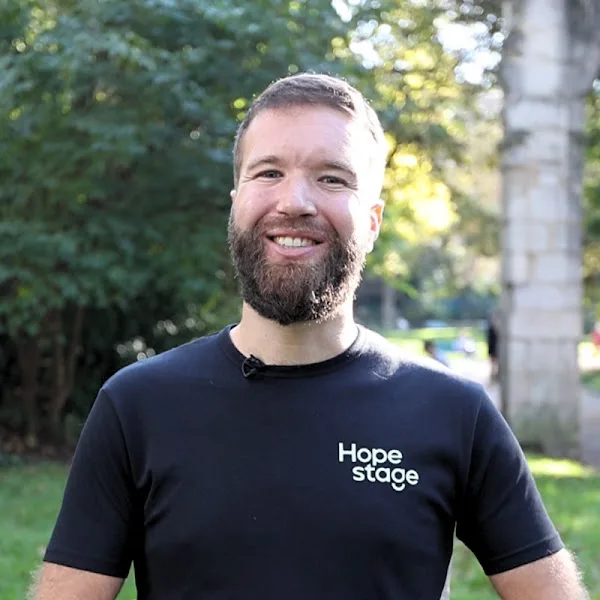
Clément Baissat, founder of HopeStage.
Questions about psychiatric medication refills
What should I do if I run out of psychiatric medication?
Contact your usual pharmacy and the clinician or service that prescribes it promptly. Tell them the exact medicine, strength, prescribed instructions, remaining supply and when you last took it. Ask for advice about your next dose and a local route to an urgent assessment if necessary. If you are in immediate danger or cannot stay safe, seek emergency care.
Can a pharmacist give me an emergency supply without a new prescription?
Sometimes, but it depends on the medicine, your circumstances, local rules and the pharmacist’s assessment. An emergency supply is not automatically available for every psychiatric medicine, and it may involve a charge. Ask the pharmacist what is possible for your specific prescription and who to contact if they cannot supply it.
What if my psychiatrist is away or will not renew my prescription?
Ask the clinic who covers prescription requests and whether you need an assessment, monitoring or missing paperwork. Explain when your supply ends. If the clinic cannot help in time, ask your pharmacist, primary care clinician or local urgent advice service what to do next. A new clinician will need to decide whether prescribing is appropriate.
Can I skip doses or take less to make my medication last?
Do not make your own rationing plan. Ask your prescriber or pharmacist for advice for the exact medicine and the situation you are in. Stopping or changing some medicines suddenly can be harmful. If you have already missed doses, explain when and how much you last took rather than guessing how to make up for them.
What if my antidepressant or another mental health medicine is out of stock?
Tell the pharmacist how much you have left and ask whether they can check availability or contact your prescriber about an appropriate option. A problem at one pharmacy does not always mean a national shortage. Do not substitute a different strength, formulation or medicine on your own.
Can I get a psychiatric medication refill online?
A remote consultation may be an option, but it does not guarantee a prescription or same-day supply. Before paying, ask whether the service can assess your situation in your location and what happens if it cannot prescribe. Use a licensed pharmacy and avoid sellers offering prescription medicines without a valid prescription.
Can I restart my usual dose after running out?
Do not assume that restarting after a treatment gap follows the same instructions as one late dose. Tell a pharmacist or prescriber the medicine, strength, how long the gap has been and any symptoms, and ask for specific instructions. Some medicines have particular restart precautions; follow the advice for your own prescription.
For another time, if research interests you
Explore research after arranging your care
Research is not an emergency refill service. Arrange help with your prescription first. When you want to explore further, HopeStage shares emails about mental health surveys, interviews and clinical trials.
Signing up does not commit you to participation or provide treatment. Studies have eligibility checks and risks, and personal benefit is not guaranteed. NIMH explains what to consider before joining research.
Get research opportunity emailsSources and editorial note
Written by HopeStage for adults seeking help with an existing psychiatric prescription. Sources checked on 13 October 2026. The scripts and checklist are original prompts to organise a conversation. This page provides general information, not personalised prescribing, missed-dose or legal advice. Local rules, eligibility and charges vary. It has not been independently clinically reviewed.
- NIMH: mental health medications and working with your prescriber
- FDA: how pharmacists help you use medicines safely
- NHS: emergency prescriptions in England
- NHS 111: emergency prescription service and exclusions
- NHS inform: prescriptions and running out of medicine in Scotland
- NHS Wales: emergency supply of medication
- Australian PBS: Continued Dispensing arrangements
- Healthdirect Australia: virtual care clinics
- College of Pharmacists of BC: emergency supply and prescription renewal
- Service Public: expired prescriptions and continuity of treatment in France (French)
- FDA: questions for patients about medicine shortages
- FDA: buying medicines safely from an online pharmacy
- MedlinePlus: lamotrigine, including advice about restarting
- NIMH: clinical research questions and answers
HopeStage was founded by Clément Baissat, who lives with bipolarity. Lived experience is expertise: practical barriers and the way care fits into daily life deserve to be heard.
Explore more practical guides