
Our approach to research ethics
We help people living with mental health conditions discover, understand and engage with research at their own pace.
Why we built HopeStage Research
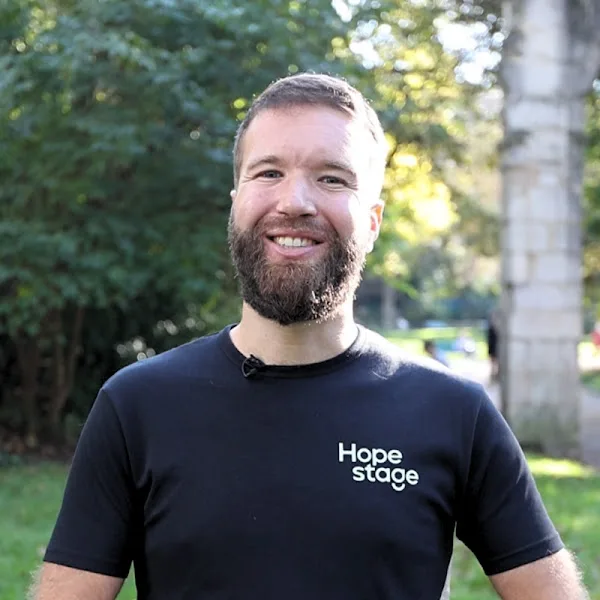
I’m Clément Baissat, founder of HopeStage, and I live with bipolarity.
When I first looked into clinical research, I had questions about safety. What would happen during a study? Who could I ask if something worried me? Talking with researchers helped me understand what safeguards look like and what I’d want to know before making a decision.
I wanted other people to have a place to start, even if they’re just curious. That means explaining the terms, pointing to the original information, and also making room for the everyday questions that matter when you’re the one considering a study.
Clément Baissat, founder of HopeStage
What you can do here
HopeStage Research is an educational resource and a directory of mental health studies. You can read our guides, explore public study records and use our summaries to make sense of what a study is asking. You can do all of that without joining the research invitation registry.
Our summaries are a starting point. Study details can change, and a public record may leave questions unanswered. Check the linked registry record, and ask the study team to confirm what’s current, what participation would involve and who may be eligible.
If you decide to contact a study team, that first conversation is a chance to ask questions. The study team explains its consent process and the safeguards that apply. If the study might affect your ongoing care, your usual care team can help you think through the decision.
What guides our work
These commitments draw on guidance from the NIH Pragmatic Trials Collaboratory and on work by Sophie Suri and colleagues on the ethics of involving patients and the public in research.
Your choice, at your pace
You can read, ask questions, take more time or leave it there. Curiosity is enough. If you consider a study, ask for information in a format you can use and take time to understand what you would be agreeing to.
Clarity about what we know
We aim to put the purpose of a study and what it asks of people into everyday language. When the public record leaves something unclear, we point you back to the source or the study team for a current answer.
Care with personal information
You choose what to share. If you use a HopeStage form, read the notice for that step to understand why information is requested, who may receive it and what choices you have. Research invitations and study participation are separate decisions.
Respect for different experiences
What feels manageable for one person may be difficult for someone else. Time, language, cost, travel and support can all affect whether someone can take part. Those are real questions that belong in the conversation from the start.
Lived experience is expertise
People living with mental health conditions know things a protocol can easily miss. How hard is it to get to an early appointment after a bad night? Would you feel comfortable answering a sensitive question at home? What kind of update would you want after the study ends?
Research teams can invite people with lived experience to help shape questions, explain consent more clearly, or make visits easier to manage. That advisory role is different from joining a study as a participant. If you’re invited to advise on a project, you can ask what influence you’ll have, how your time will be recognised and how the team will tell you what changed.
Sharing lived experience can feel personal. A respectful invitation makes it clear what will happen to anything you share and gives you room to skip a question, pause or bring up a concern.
What to ask before joining a study
Joining research is your choice. You can decline or decide to stop after joining. The protections that apply depend on the study and where it takes place. In a clinical trial, ask the study team to explain the consent process, any independent ethics review and how they handle safety concerns. Those safeguards matter, and a study can still involve risks or inconveniences. Any benefit to you is uncertain.
Bring a question that matters to you, even if it seems small. Here are a few to get you started.
- What would I be asked to do, and how much time would it take?
- What risks or side effects should I know about? Who should I contact if I’m worried?
- Could the study affect my usual treatment or support?
- Who can see my information, and what happens to it if I leave?
- How would I stop taking part, and could the team help me do that safely?
If an answer is hard to follow, ask the team to explain it again. You can take the information away and discuss it with someone you trust before deciding.
What informed this page
- Ethical considerations for patient engagement · NIH Pragmatic Trials Collaboratory
- Patient and public involvement and engagement: Do we need an ‘ethical anchor’? · Suri et al. (2024)
- Declaration of Helsinki on medical research involving human participants · World Medical Association
Start with your rights
Our guide explains consent, safety monitoring, privacy and what you can ask the study team before deciding whether to take part.